Next:Previous
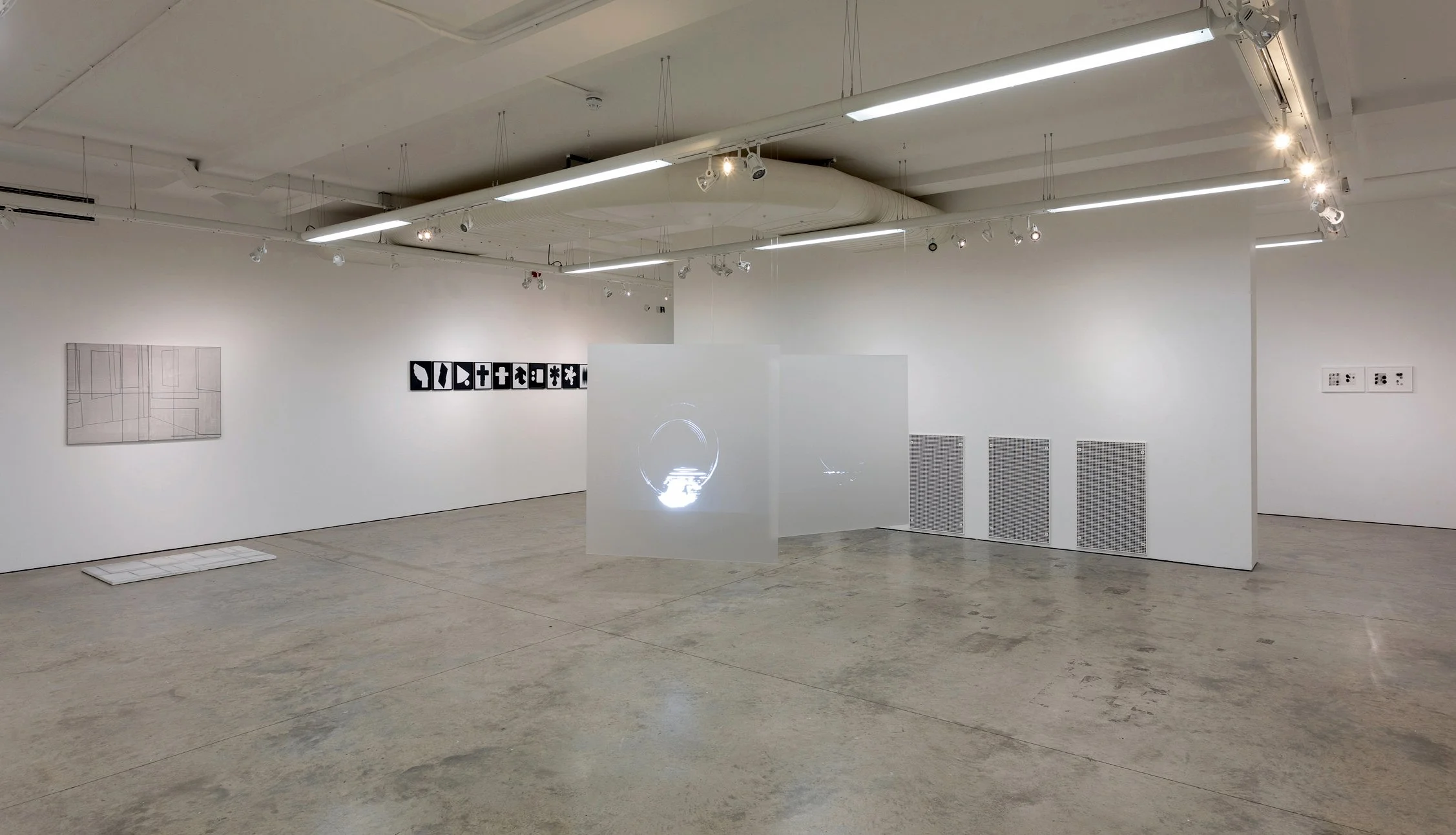
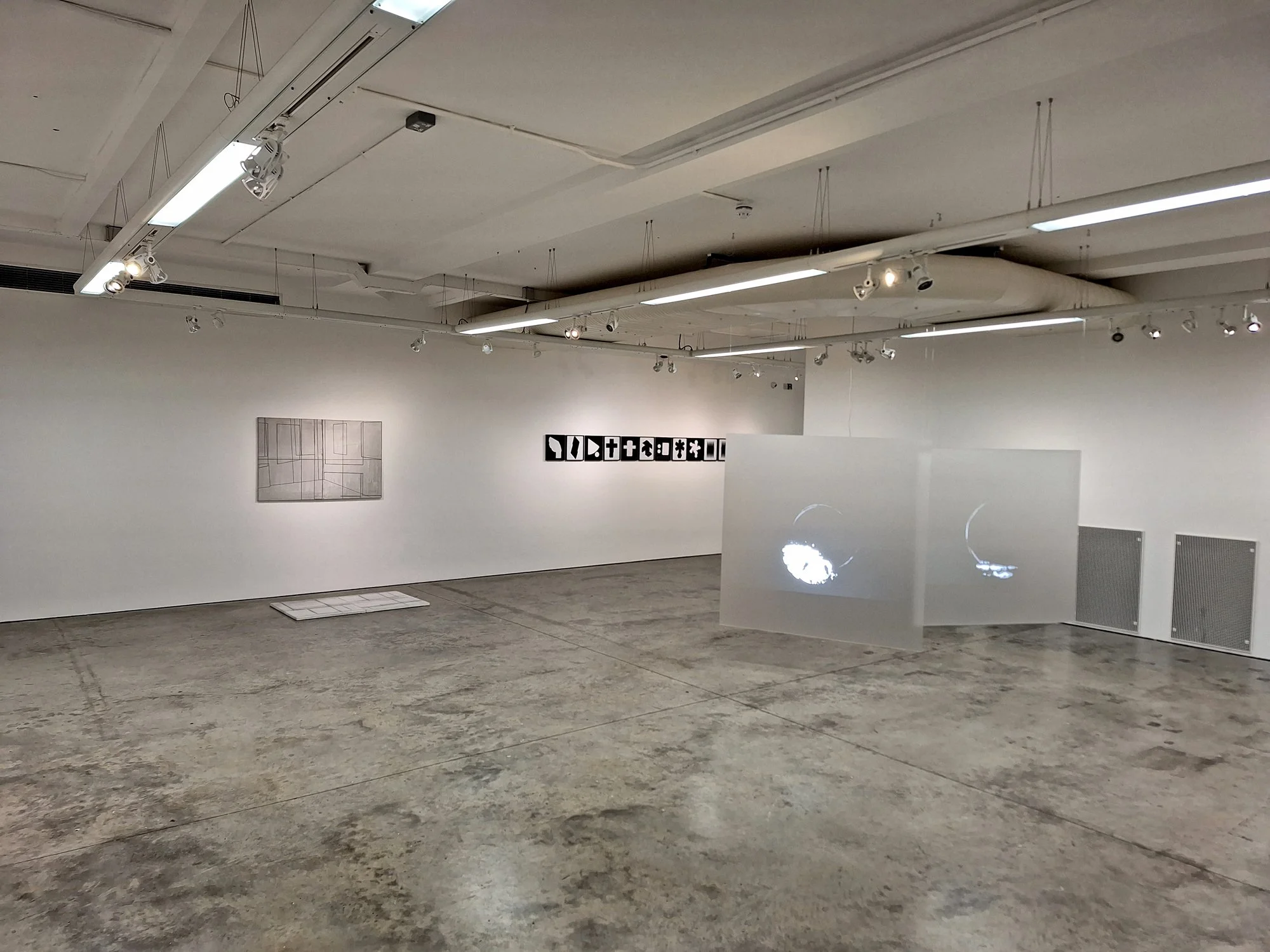
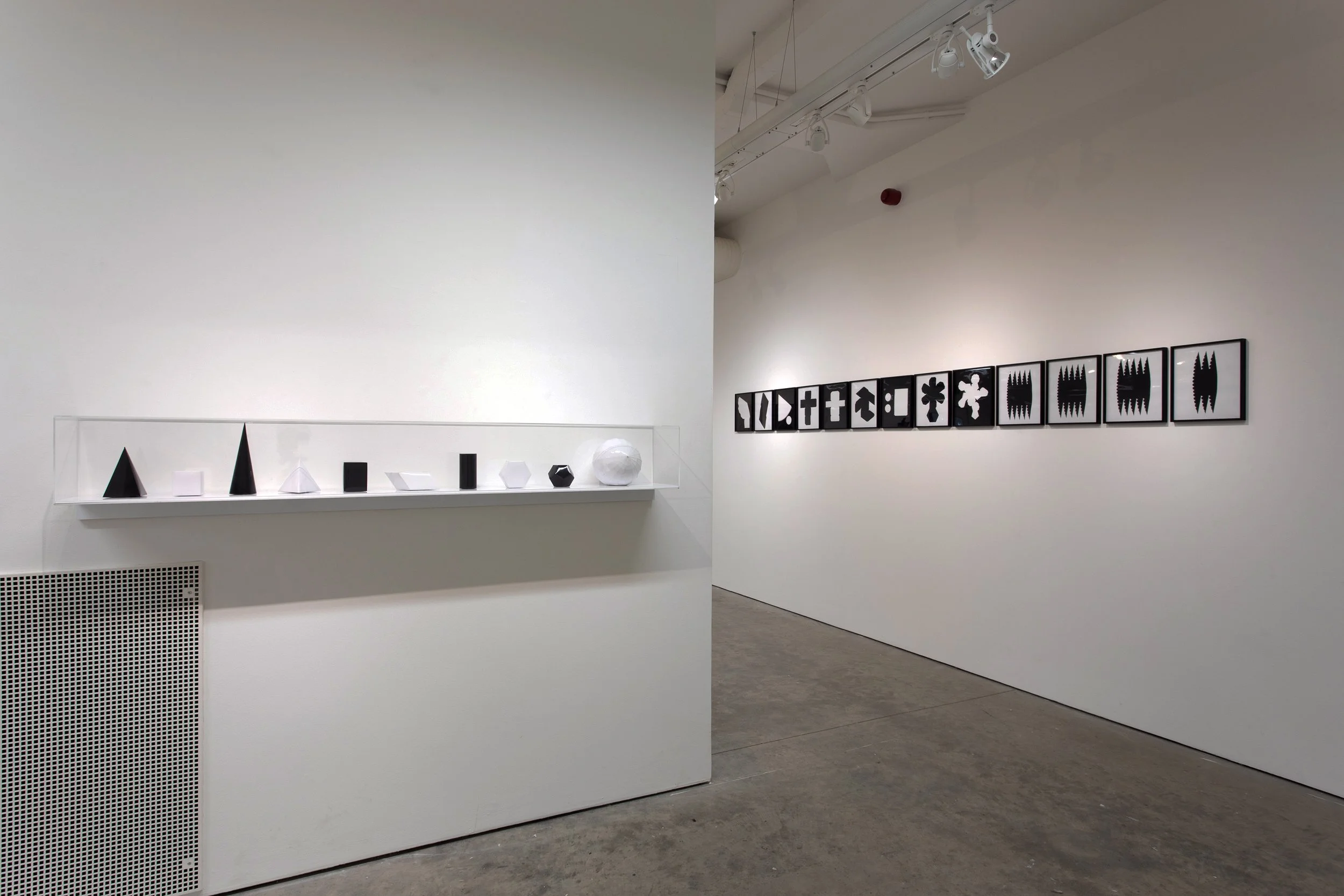
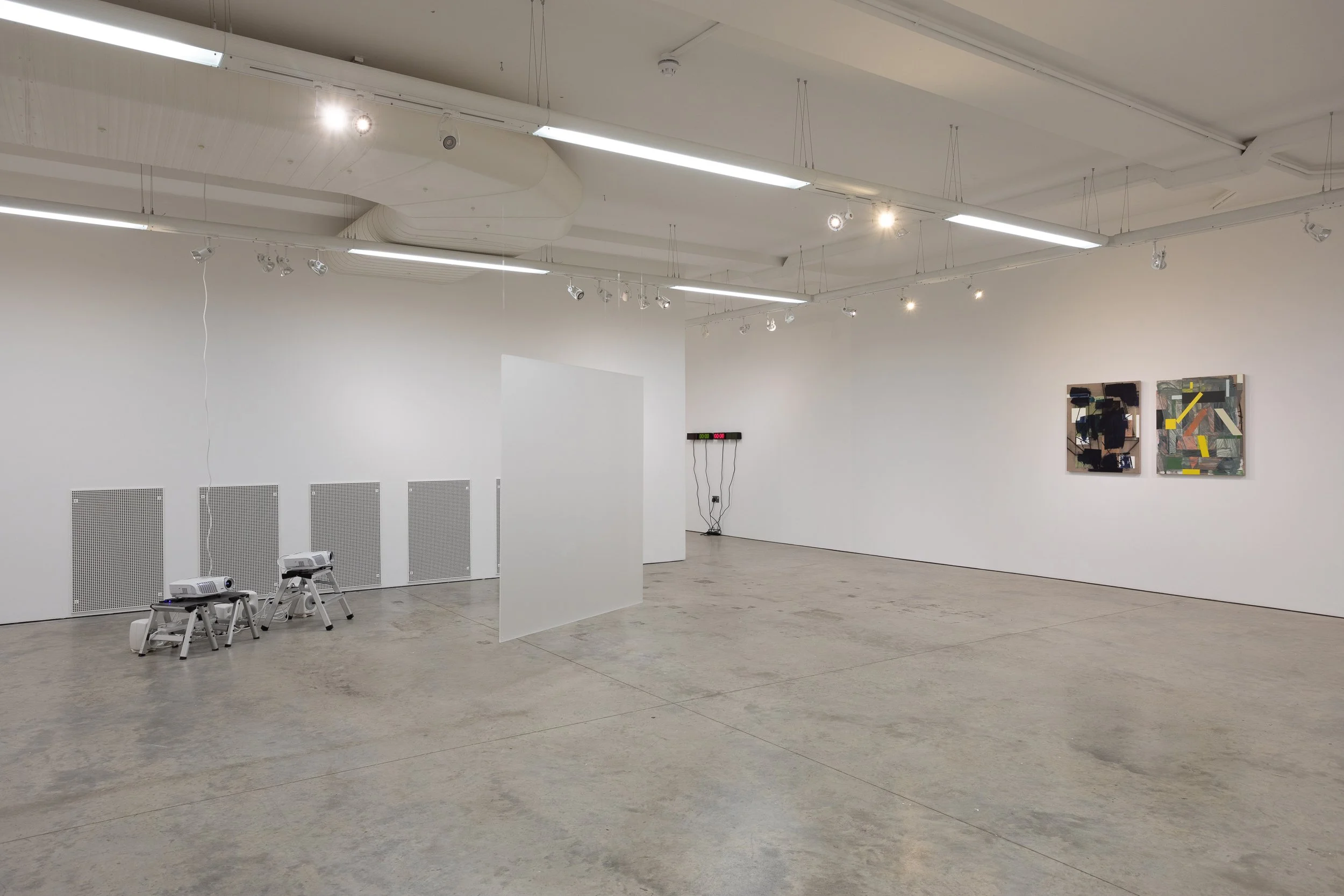
Exhibition curated by Steven Scott for the Gerald Moore Gallery, London, September 2023
Allusions to Illusions
Steven Scott
Introduction
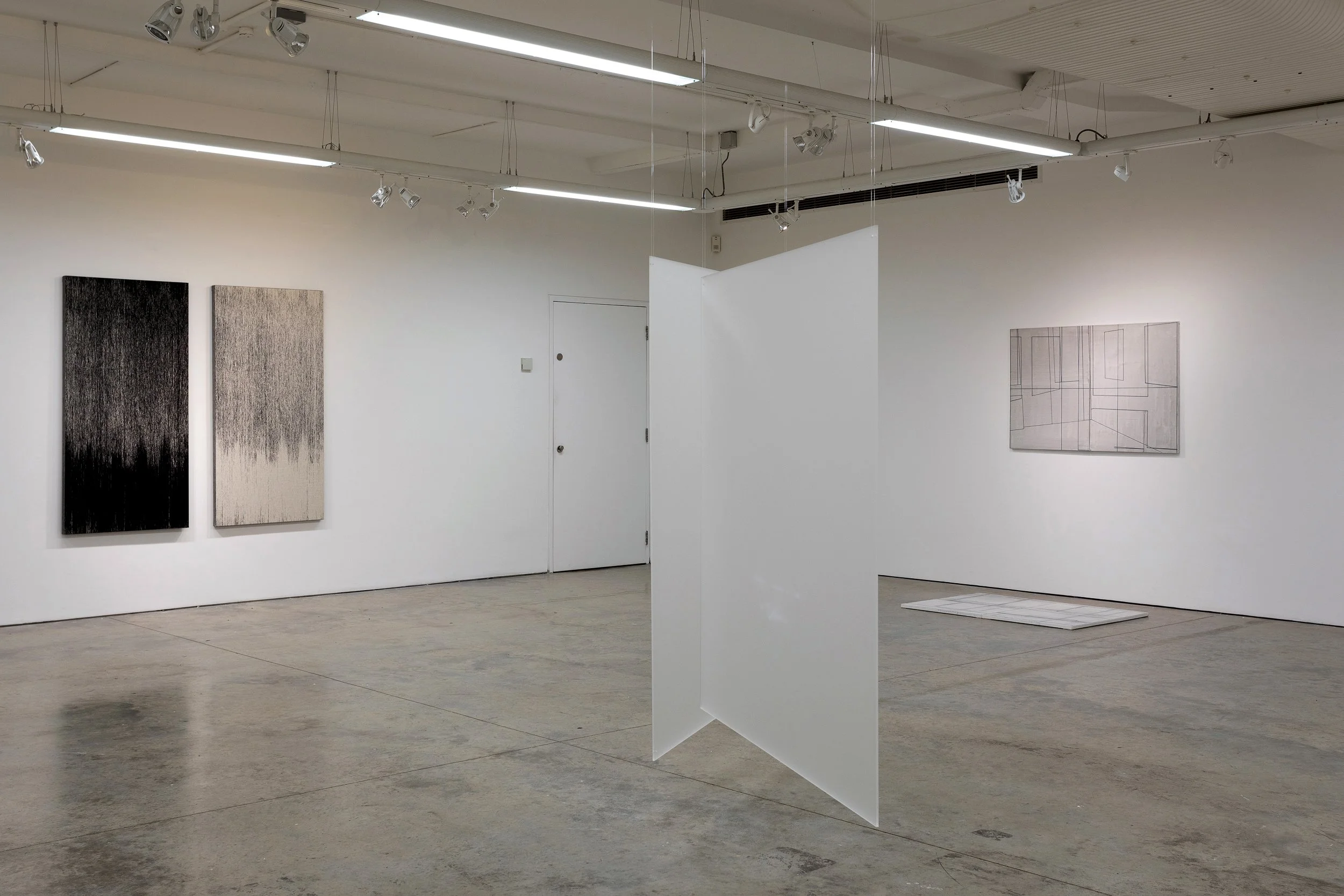
The works in the exhibition Next:Previous were selected in anticipation that they might accentuate and complement each other when experienced together. My hope is that the references and rhythms that underpin each piece accumulate in the imagination to form subtle resonances and oblique alignments, and from this questions will arise that challenge my previous thinking around methods of extension and sequence.
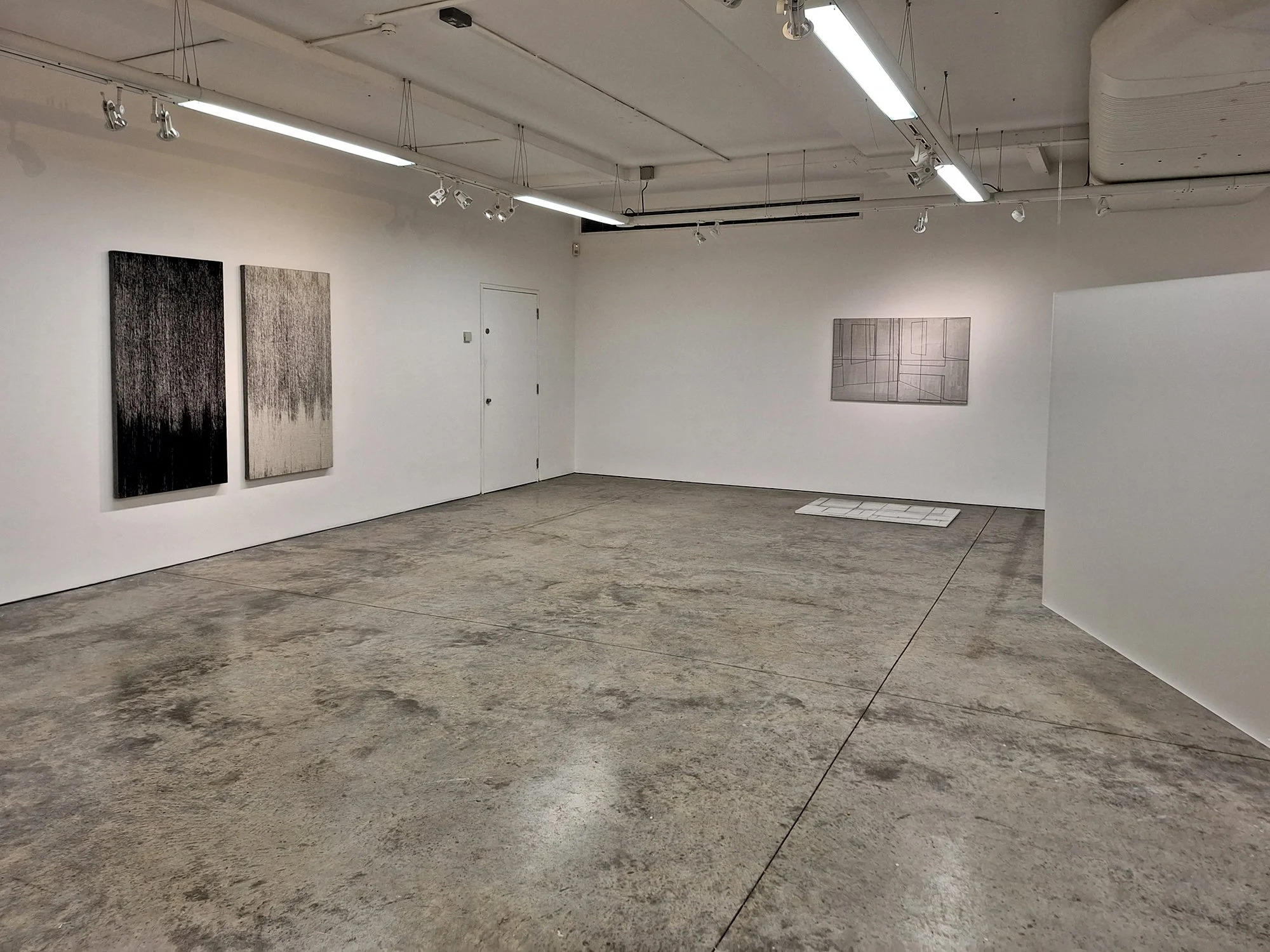
This text is intended as an adjunct to the exhibition and is designed to add different perspectives to the interrelationships that form between the images and objects on show. So rather than writing an overview of the works themselves I begin this text by offering a series of filmic references, and open these out to propose rhythmic relationships between image sequences and dual compositions in the hope that these notions offer parallels to the show as a whole.
Points in time
Without an elementary memory that connects two moments, there will be only one or the other, consequently a single instance, no before or after, no succession, no time.¹
In discussing the associations between successive scenes that formed the basis of his cinematic montages Sergei Eisenstein made the point that we might also read meaning in dualities other than the filmic construct, stating: ‘This…is not in the least a circumstance peculiar to the cinema, but is a phenomenon invariably met within all cases where we have to deal with the juxtaposition of two facts, two phenomena, two objects’ ² He claimed that meaningful associations may be found between any authored phenomena and that this is aided by the degrees of adjacency and difference between the graphic, rhythmic, metric and dialectic characteristics that have been applied in the composition process.
Regarding such intersections of images film maker Werner Nekes suggested degrees of difference form not only the essence of his own work but are ultimately the fundamental basis on which cinema functions:
Cinema is the difference between two frames…if you take two frames, the difference between them defines the smallest unit of filmic language that is possible…this difference…is a construct of a time/space relation.³
Here Nekes identified the point at which the difference between two images is the source of both animated movement and spatial representation, in a conflation of temporal sequence and dual viewpoints. Using benign examples such as the Thaumatrope to illustrate his point he named this configuration of two images kine, and considered it to be the fundamental basis of filmic language, while also allowing for difference to take effect between spatially adjacent images. So while the kine may have traces of Soviet montage theory, whereby scenes were edited to forge meaning through accumulated associations, an alignment of two or more images in contexts beyond the cinematic can allow for differences between discontinuous frames to operate as images with associative possibilities in contiguous space: As a ‘…construct of a time/space relation’.
Positions in space
If an image sequence suggests animated movement, then the dualised image, as a diptych in a bi-lateral arrangement, has spatial associations to the doubling properties of the mirror, and this in turn alludes to the potentially deceptive qualities of vision itself. In this way both the image sequence and the doubled image can problematise the process of seeing by preventing an absolute apprehension from one viewpoint or at one moment in time. Such multiplicities require that points or positions instead accumulate in a process of assimilation that takes time. In short a delay is introduced, and the possibilities that arise from the interrelationships of dualised and sequenced works in Next:Previous might result from such delays as a measure of the degrees of difference that determine how two particular images can signify more than one condition; as a sequential flow and as spatial positions.
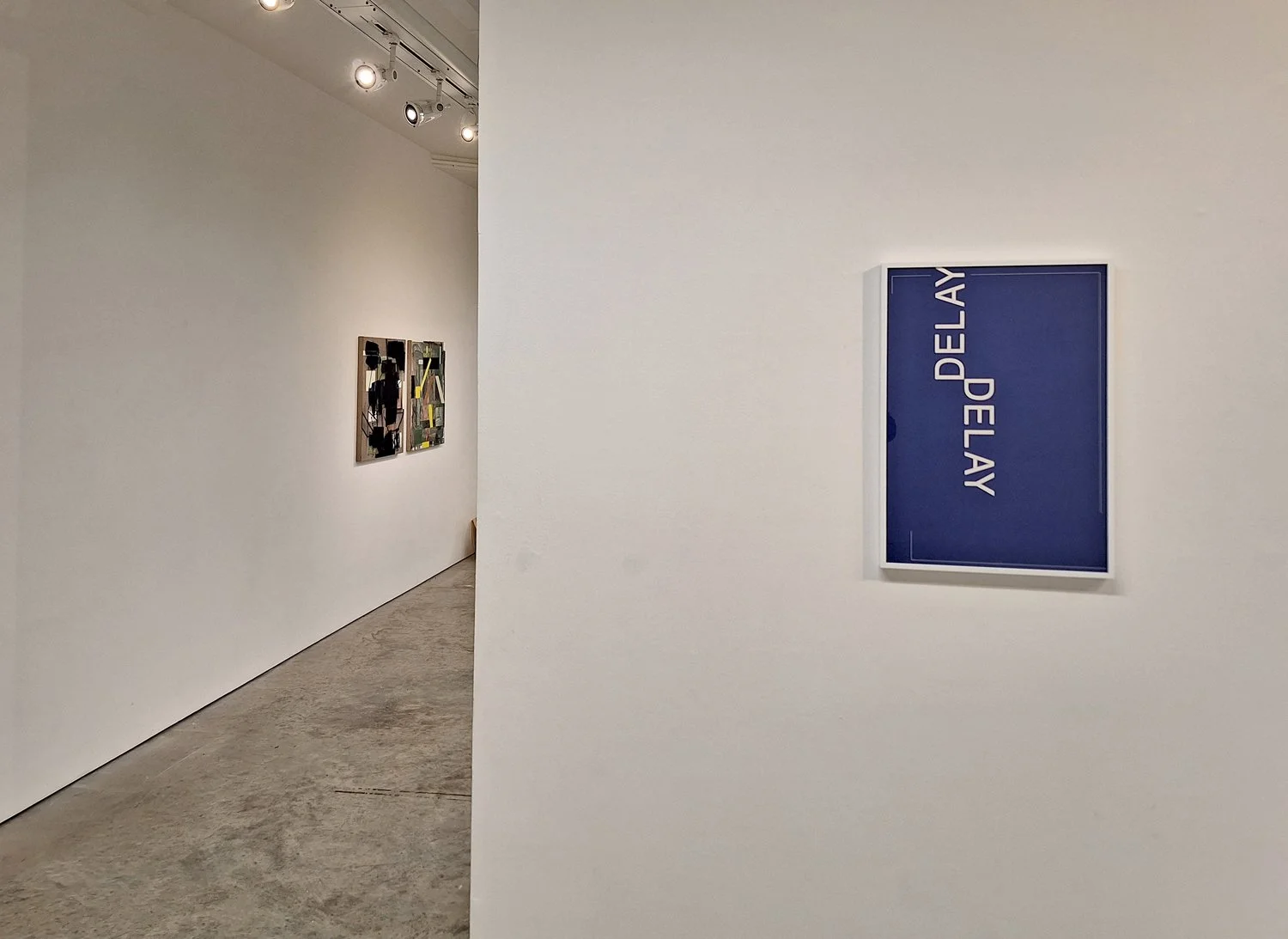
Rosalind Kraus writes of such doubled or multiplied conditions in terms of a pulse – a simple rhythm – and its delaying of apprehension as a refutal of the position of high modernist art in its striving to achieve a purity of vision, ‘all at once’, in a singular absolute work.⁴ Such perceptual delay, and the subsequent sense of a ‘distancing’ of subject matter, might also be compared to the experience of repeating a word or phrase to the point that it becomes unfamiliar. It can result in reflexive awareness that imposes on us to the point that if – to co-opt Paul Valery’s famous aphorism – ‘to see is to forget the name of the thing one is seeing’, then, to see a doubled image is to be reminded that one is seeing not so much a subject in a mediated form, but the mediating form itself.
In such cases tacit knowledge of what it is we are seeing can be obscured by an array of concurrent possibilities. A multiplied image can spatialise the visual process, introducing difference as an interstitial or pause that precedes an immediate pictorial remit. It allows for indeterminacy to take effect, introducing possibility and requiring that we pay attention differently.
Sequence and Stereograph
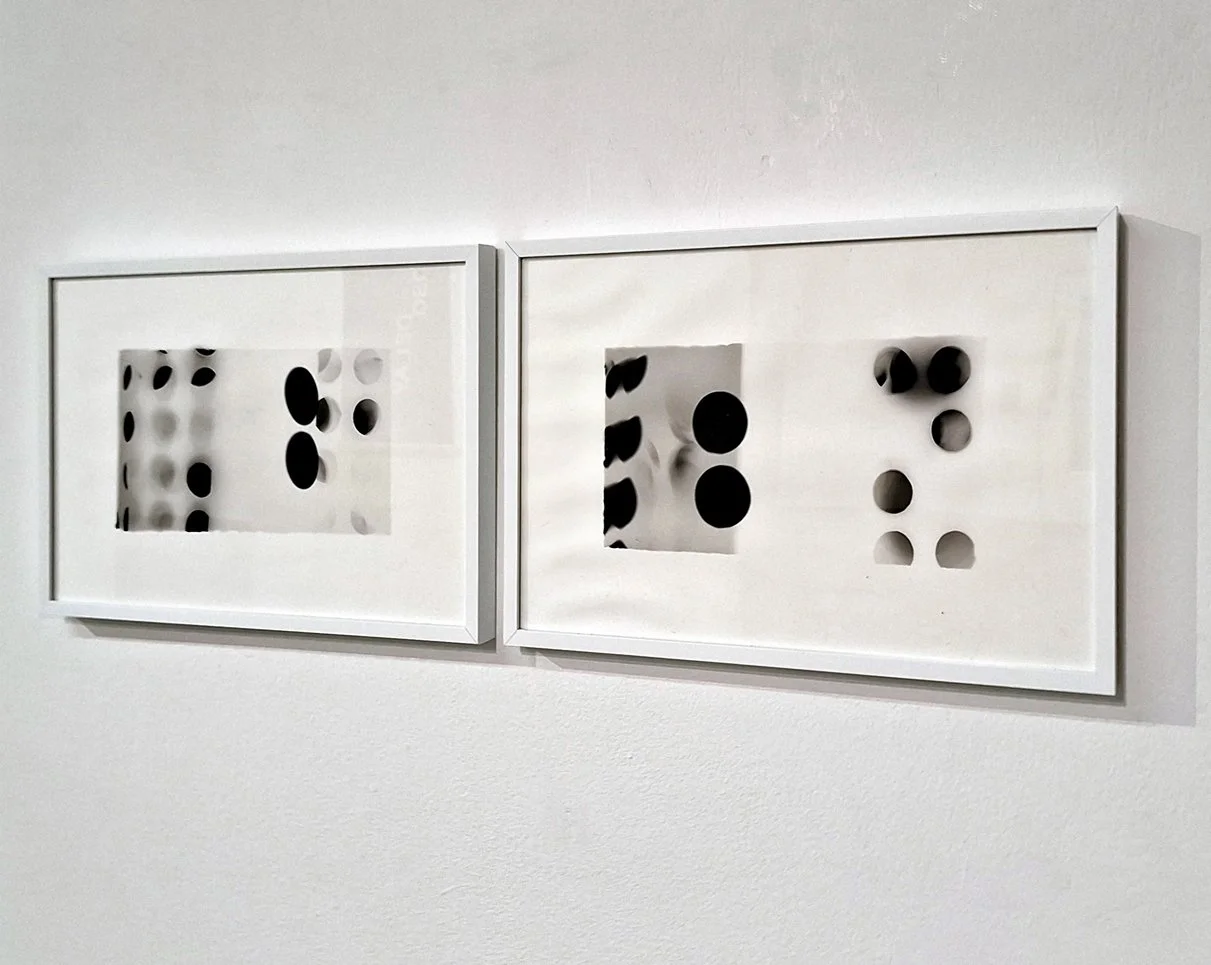
Taking Nekes’ notion of the difference between two frames as a perceptual basis upon which cinema presents the illusion of movement we might ask how this difference is revealed in contexts other than the filmic. Given that Eisenstein referred to this in relation to his methods of filmic montage how might Nekes’ kine appear when the successive fractions of a second that it represents are spatialised in the form of two images side by side? Can two film frames take on a doubled reading when encountered in space; representing both continuous flow and contiguous space?
In its dual image configuration, the stereograph – a photographic viewing system that uses two lenses to mimic the stereoscopic vision of the eyes to give an illusion of spatial depth – offers a counterpoint to the animated movement that the film sequence represents. To consider this notion, I am using the example of Nervous System, a series of animated projections produced by film maker Ken Jacobs.
Jacobs uses the term paracinema to denote his projected-image events that omit key material/mechanical elements of the filmic medium such as film reels or a camera. He has produced a series of such works that consist of alternations of just the two adjacent images that comprise a stereoscopic photograph. With these he conflates aspects of the filmic and the photographic by projecting the stereoscopic images on top of each other while dissected the projector’s light beam with a rotating blade to create a sequence of alternating interstitial blank frames. The resultant flickering alternation between images has the effect of ‘fixing’ each iteration on the retina in a manner similar to the shutter and gate of a film camera and projector. This imperceptible interstitial space causes the stereographic photograph to be read as a composite impression over time. The effect can be compared to Nekes’ example of the thaumatrope as there is in each an imperceptible fraction of a second when one image disappears to be replaced by the next. But with Jacob’s Nervous System the persistence of each image on the retina forms an illusion of the photograph as spatialised and appearing to float above the surface of the screen as if animated at a point somewhere between two dimensions and three. His repetition of images that have been recorded from adjacent positions transposes their minute spatial difference in perspective, and fuses them in a ‘time/space relation’. The sequenced and the stereographic image, synonymous with the reduced form of the kine are, at such minute degrees of difference, interchangeable and effectively variations of an illusionary principal that is both continuous and contiguous.
Phasing as a time/space relation
Time-flow is both the piling up of and the subsequent differentiation of one rhythm and the next.⁵
A diagram of the interdimensional differences between two frames would need to describe alternations between multiple iterations as points in time mapped against positions in space. And such a diagram would form the basis of a simple time/space matrix that would by implication also allow for a degree of slippage between multiple positions in space as they occur over time. What such a diagram would therefore incorporate is the possibility of the phenomenon of phasing.
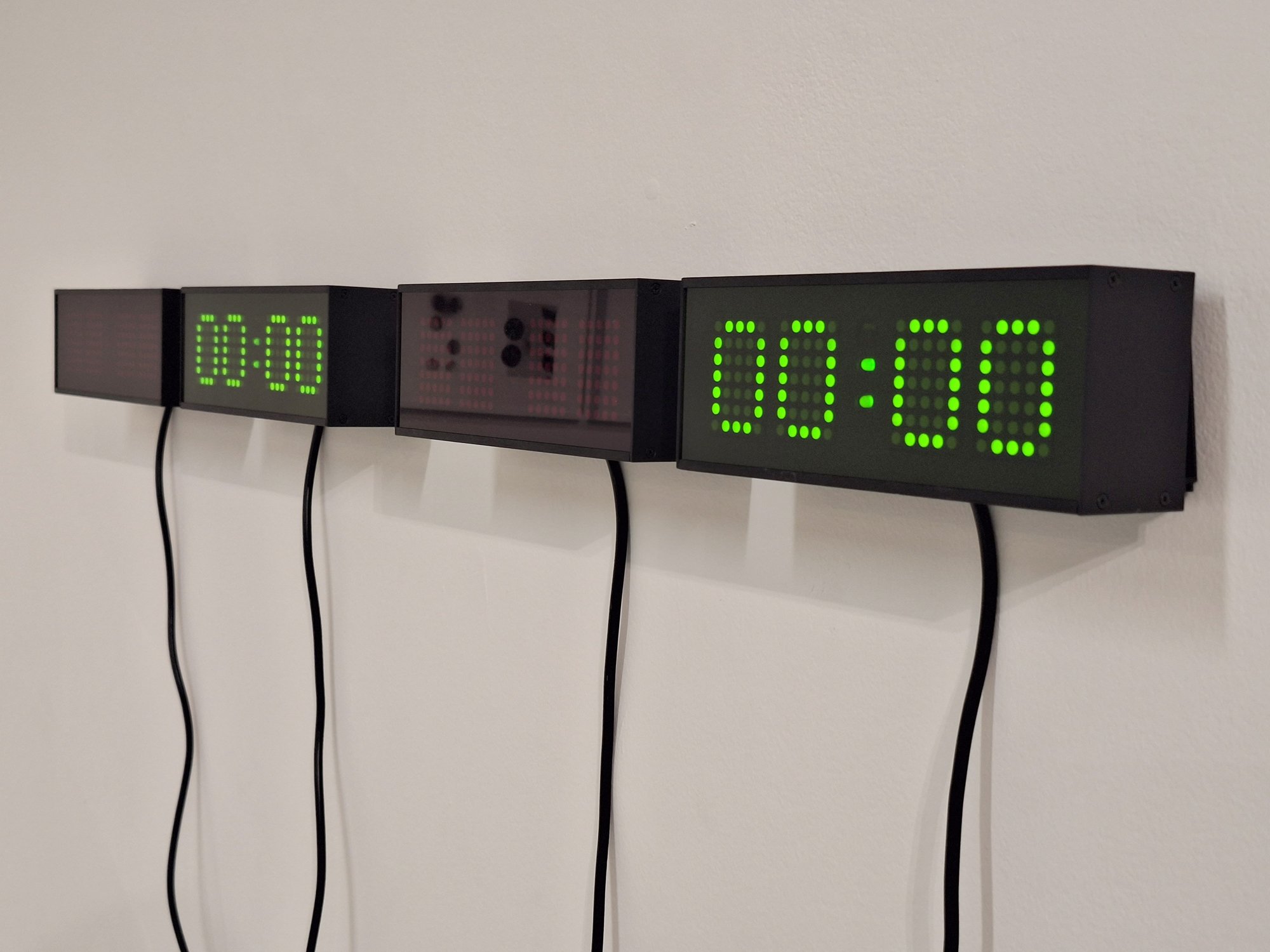
If considered as the perception of undulating degrees of concurrency and slippage between adjacent events, phasing is the result of the difference between one pattern of behaviour in time seeming to shift in relation to an adjacent independent pattern, from which we might assume a meta-cycle of reoccurring synchronisations.
Phasing is most readily associated with the techniques of musical composition developed by Steve Reich in which serial refrains for two or more instruments, voices or recordings are designed to slip in and out of unison in simple patterns of chance. The effectiveness of phasing as a compositional technique relies on this shifting of one refrain or rhythm against another to form new structural/musical relationships.⁶ Reich’s early tape-based phase pieces such as It’s Gonna Rain (1965) and Come Out (1966) consisted of pre-recorded sounds or electronic pulses that were doubled and designed to slip out of synchronisation in echoing, repeating patterns with rhythmic effect. Reich developed these early experiments with chance into complex multi-layered, works using live instrumentation in repeating permutation cycles. As an adjunct to his musical compositions in the early 1970s he briefly explored image phasing with the use of video recordings of subjects speaking short phrases. These were copied and played back on three or more monitors simultaneously so that the subtle differences between the timing of each multiplied into repeating patterns of phasing sound and image.
Visual interpretations of Reich’s phasing compositions have since been created that extend the experience of his music. Artists Norbert Pfaffenbichler and Lotte Schreiber have produced video work in response to Reich’s Piano Phase, and Choreographer Anne Teresa De Keersmaeker developed interpretations in which dancers repeat gestures to Reich’s phasing music, moving precisely to one rhythmic loop as it slips in time against another.⁷
In order to explore phasing as a visual phenomenon in which time is experienced in spatialised, de-synchronising loops it should be considered as both a spatial and temporal concern, operating in the simple matrix described by differences between multiples in space and repetitions in time. In this way the difference between two frames in an image sequence can be considered against the difference between two images in bi-lateral array. It is the perception of an ebb and flow of these differences as patterns of behaviour, such as that of a repetitive sequence, that gradually draws attention to an alternation between difference in time and difference in space as it plays out in cycles of repeat and return.
Phasing as ongoing possibility
Phasing, whether audio or visual, can be perceived as cycles of greater and lesser degrees of concurrency in patterns that are perceived to form over time. Once this pattern of slipping between synchronisation and counterpoint is recognised there comes an implicit understanding that such alignments, dis-unions, and realignments, will continue. But the ability to predict when the next re-alignment will arrive again can be elusive. Without the ability to retain, measure and calculate we can only assume the possibility of future phases of synchronisation, and so must ultimately acknowledge that an aspect of the phenomena remains beyond a perceptual threshold. In this way phasing retains a pertinence, by offering an awareness of ongoing possibility that spans the immediacy of our vision and our ability to visualise.
As such phasing reveals an extent to our perceptual abilities as it makes a call on both memory and the imagination to consider conditions that remain beyond what we can witness at a given moment. The progressing undulations of phasing may initially appeal to our visualisation of time as a directional flow, but we are soon required to extrapolate from its cycling patterns an awareness of ongoing spatial change and ultimately an indeterminate point when repeating patterns may realign. Such anticipation of future alignments extends Nekes’ notion of the kine as a time/space relation from the moment of anticipation and the immediacy of seeing two frames coincide, and opens it out towards events that remain beyond actuality. Thus the experience of phasing might be said to be one of perpetual possibility, fuelled by the ongoing potential of witnessing its returning states in actuality. As such the experience of phasing is to be suspended in the span between possibility in the form of assumption and probability as a form of protention.
© Steven Scott 2023
Written to accompany the exhibition Next:Previous at GMG London 2023
Photos by Josef Konczak
¹ Henri Bergson, Duration and Simultaneity, (Clinamen Press, 1999), 48
² Sergei Eisenstein, The Film Sense, (Faber and Faber, 1986), 4
³ Werner Nekes ‘Whatever happens between the pictures, a lecture by Werner Nekes’ Afterimage November 1977 http://www.vasulka.org/archive/4-30c/AfterImageNov77(3002).pdf
⁴ Krauss, ‘The Im/pulse to See’ in Vision and Visuality, Ed. Hal Foster, (Bay Press, 1988), 58
⁵ Jay Lampert, Simultaneity and Delay: A Dialectical Theory of Staggered Time. Bloomsbury (2012), 132
⁶ Reich wrote ‘…I had the idea that if a number of single tones were all pulsing at the same tempo but with gradually shifting phase relations, a great number of musical patterns would result. If the tones were all in phase (struck at the same instant), a pulsing chord would be heard. If the tones were slowly shifting just a bit out of phase, a sort of rippling broken chord would be heard that would gradually change into a melodic pattern, then another, and so on.’ Steve Reich, ‘The Shifting Pulse Gate’ in Writings on Music 1965-2000. (Oxford University Press, 2002), 38
⁷ Visual equivalences to phasing might also be found in the undulating interference patterns and moiré effect formed from layering printed patterns.
Exhibited works:
Andy Bannister: Container/Contained/Sellafield ’16. 2017
Frederick Bell: The Conversation. Diagram Painting Number One. 2007
Andrew Bick: OGVGGT [double echo]. 2020
Peter Downsbrough: Delay/Delay. 1990
Susan Morris: Binary Tapestry & Binary Tapestry (Reversal). 2016
Nicola Rae: Remote Sensing Sonification: Jupiter Aurorae. 2023
Steven Scott: Sequence and Stereograph. 2023
Clare Strand: Spaceland/Flatland. 2012