Image Phasing
Spatialised time, interference patterns and protention
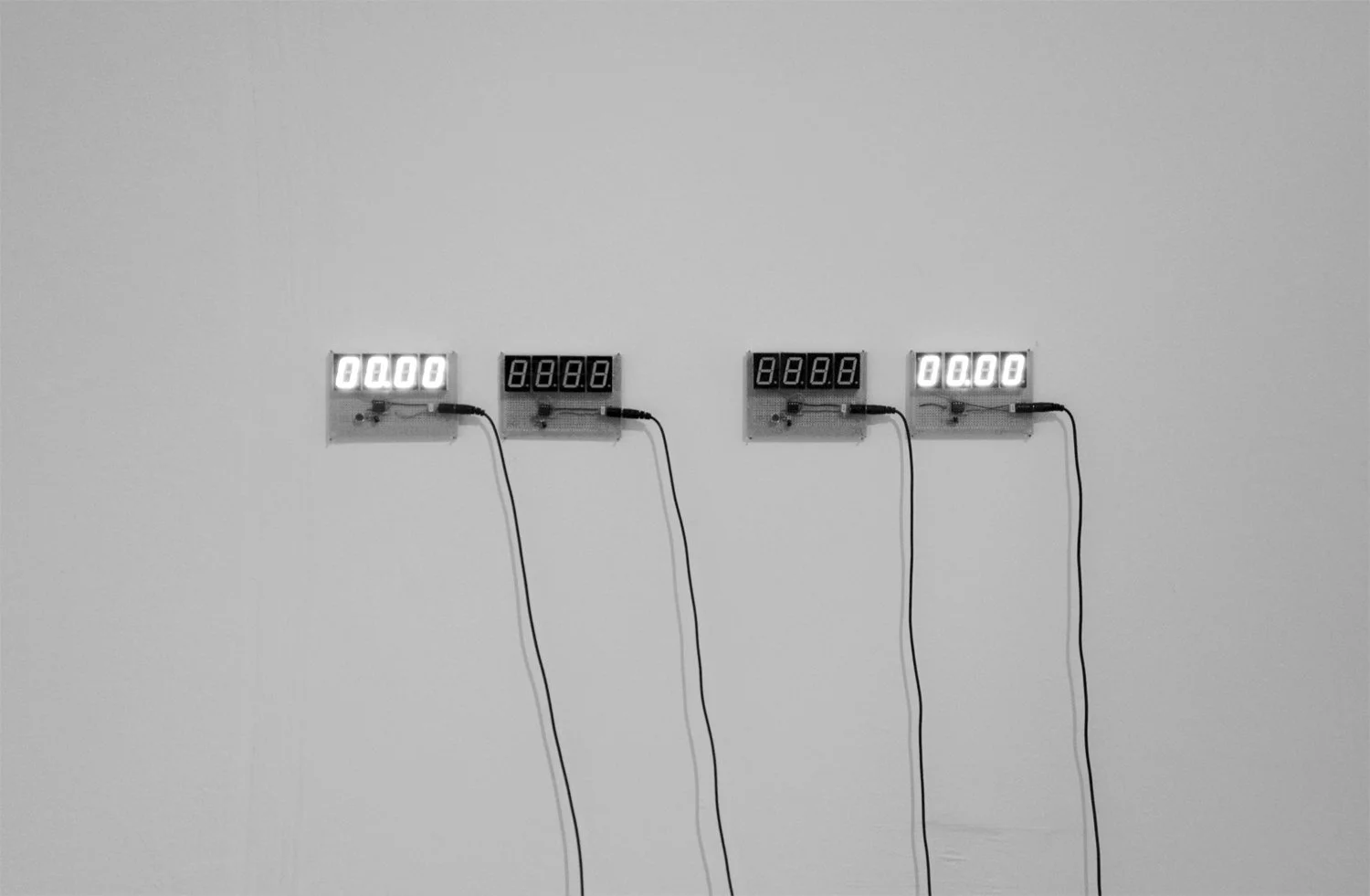
Imagine two adjacent lights flashing on and off at intervals of about 1 second. These lights are not connected, and over time it becomes clear there is a slight difference in the timing of their alternating states. This difference is imperceptible but for a slow increase in the degrees of difference of timing between each lights’ switching on and off.
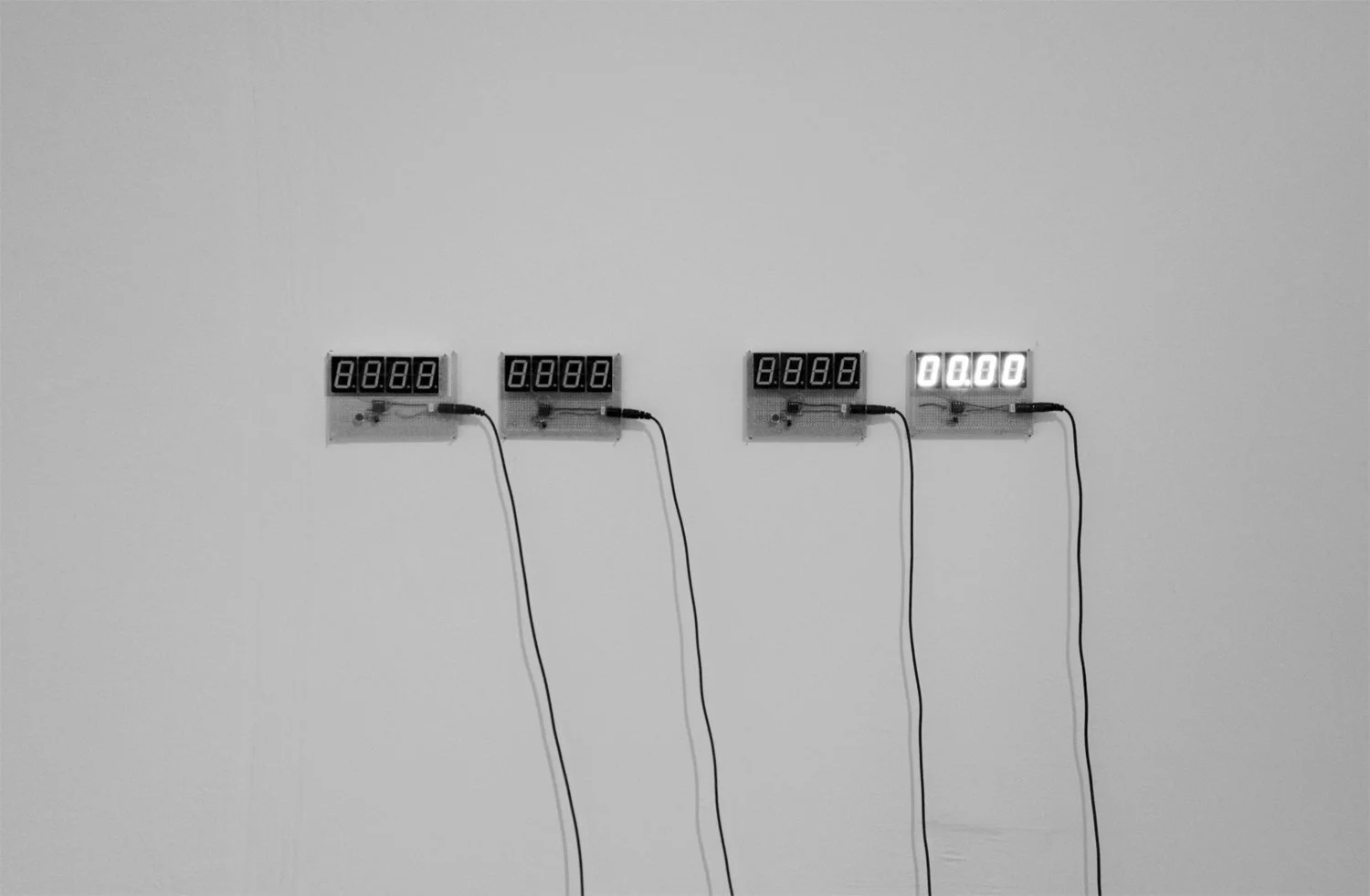
Now add more such lights to this scenario, each with imperceptible timing differences. The result would be a form of controlled chaos in which multiple pulses of light slowly shift in and out of synchronisation.
This phasing phenomenon is perceived in the patterns of concurrency and counterpoint that seem to form between such simple rhythmic sequences. In seeing patterns evolve and dissolve across this array of flashing lights we might imagine, perhaps in vain, that a meta-cycle of complete synchronisation will eventually take place, and we will witness all the lights realign, albeit briefly, in real time.
But without precise measurement of the timings of these binary events there is no way to calculate any future phases of synchronisation, we can only assume that such realignments are possible and so acknowledge that an aspect of the phenomena remains beyond a perceptual threshold. In this way the perception of phasing retains a pertinence, by offering the ongoing possibility of realignment in a perceptual process that conflates the immediacy of vision with our ability to visualise.
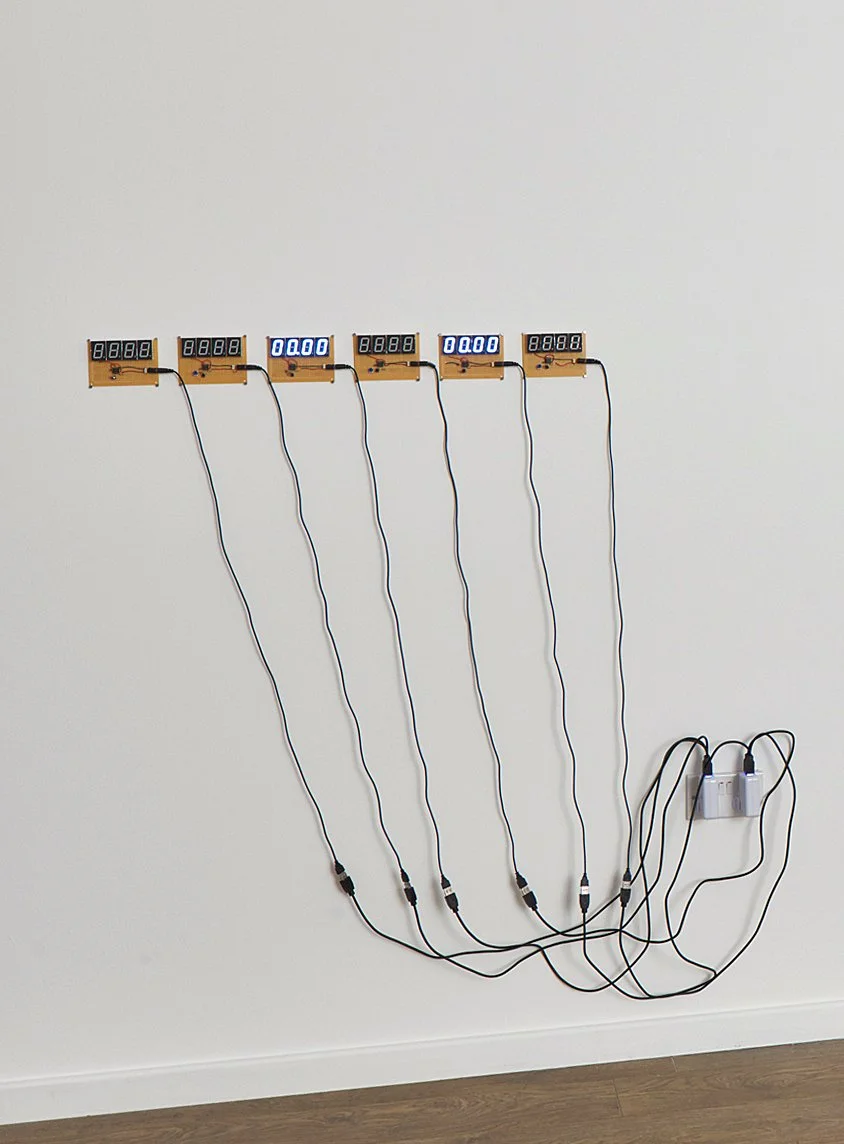
The awareness of this phenomenon developed out of my early work with moving image in which I explored temporal loops, spatial layers and degrees of structural difference using combinations of film and video. The experience of image phasing remains fundamental to my practice and in different ways underpins the thinking behind numerous subsequent works that are now composed in space rather than over time.